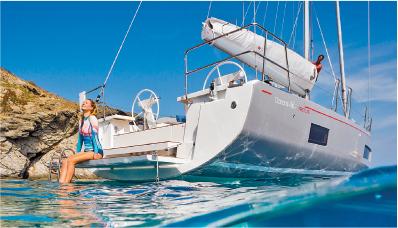

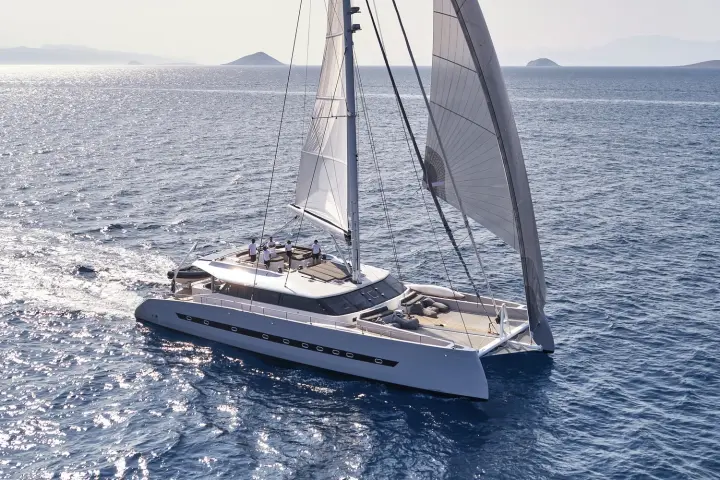
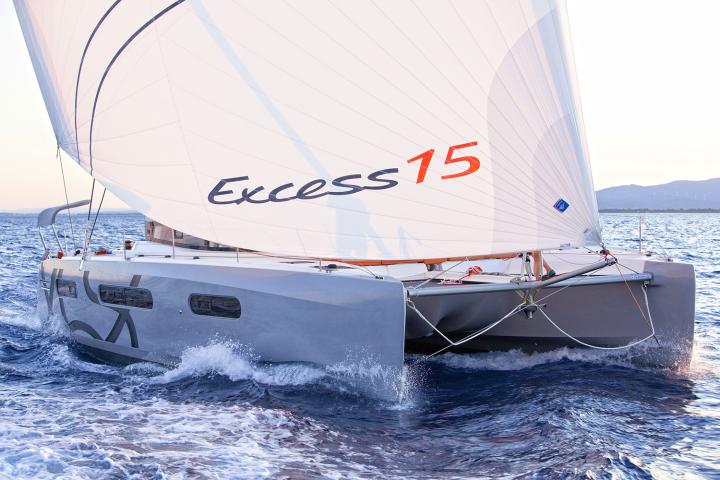

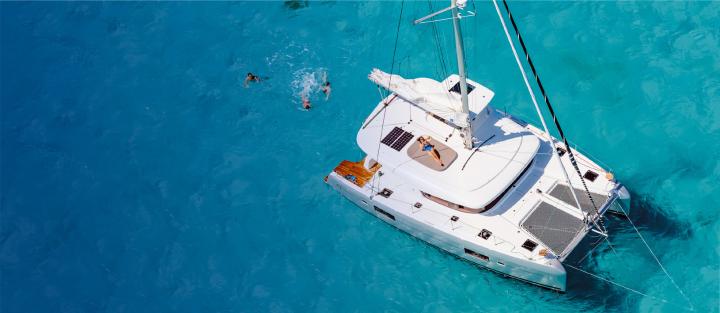
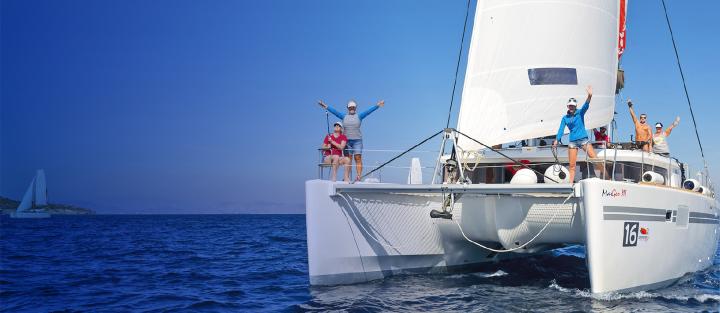
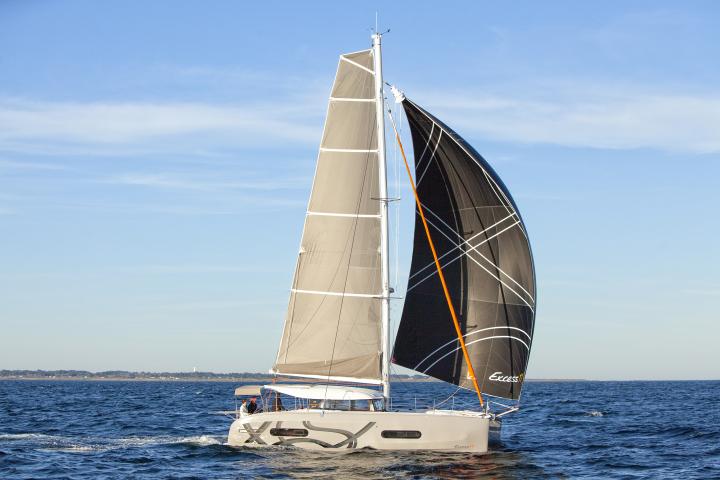
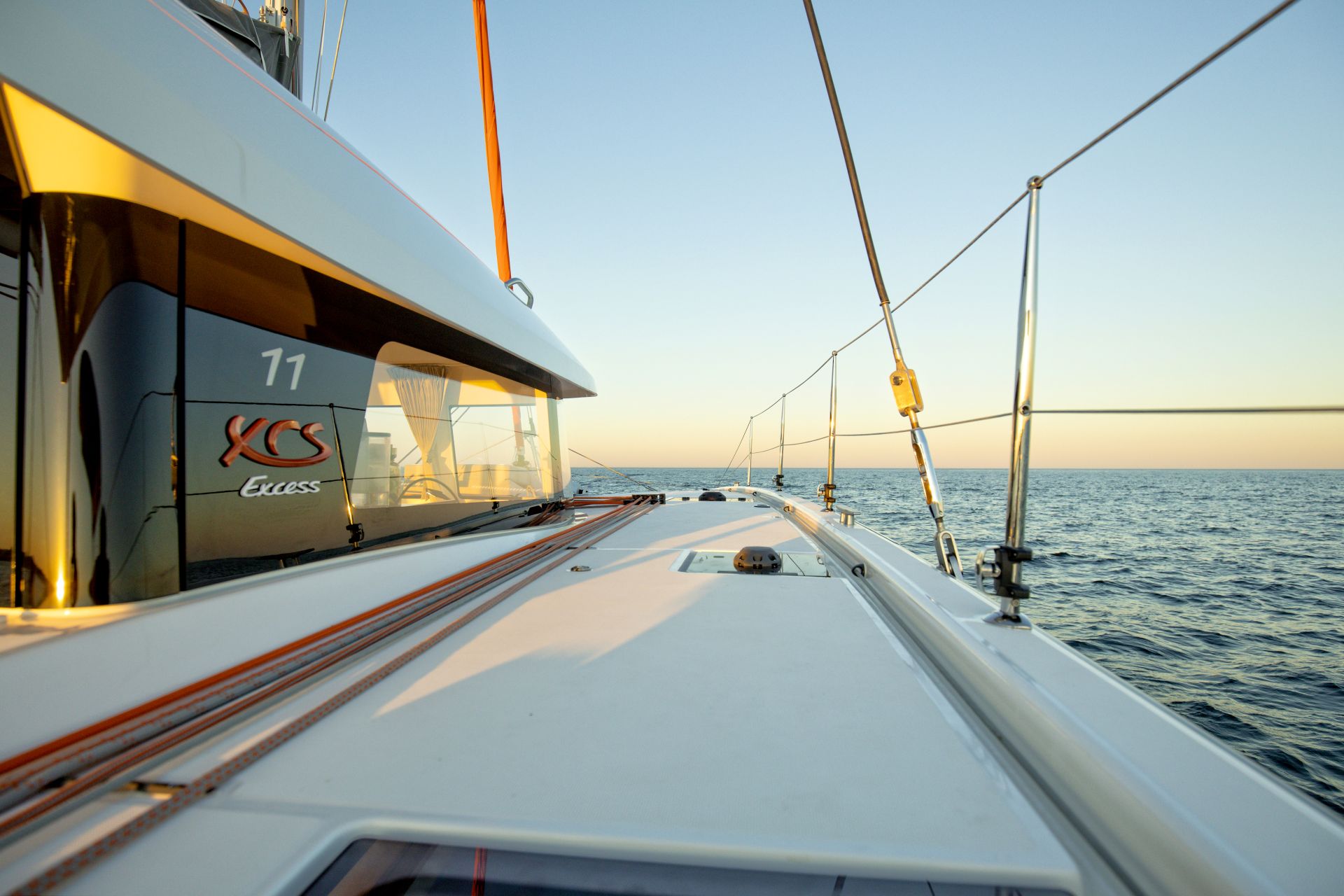
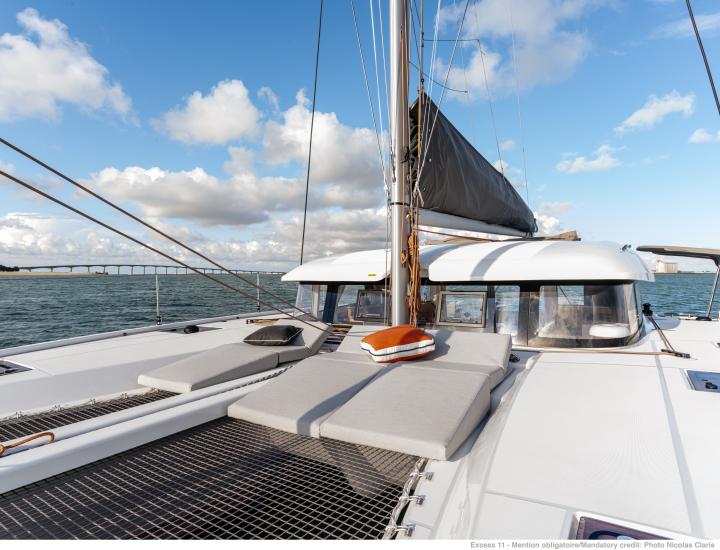
That future is beginning to take shape with the launch of the Excess 11, the world’s first production multihull integrating recyclable Elium® resin and recycled glass fibres.
For decades, composite materials have been essential to modern boatbuilding. They make yachts lighter, stronger and more efficient, but recycling them at the end of their life has remained a major challenge.
Now, Groupe Beneteau is working to change that.

A different way to build
The new approach uses Elium® recyclable resin, allowing resin and glass fibres to be separated and recovered rather than treating the composite as a material with no second life.
The Excess 11 also incorporates 45% recycled glass fibres, bringing recycled materials directly into a production catamaran.
The project is part of a wider industrial initiative involving specialists across the entire materials and recycling chain. From resin and glass fibre production to recycling and logistics, the aim is to create a more circular system for composite boatbuilding.
Watch the interview below to discover more about the technology behind this breakthrough.
From research to the water
What makes this milestone particularly interesting is that the technology has moved beyond the laboratory and into series production.
After years of research and development, Groupe Beneteau is now applying recyclable materials to an actual production catamaran, demonstrating that environmental responsibility can become part of everyday boatbuilding rather than simply a vision for the future.
It is a significant step in a much bigger journey: rethinking the materials we use, reducing waste and finding ways for valuable resources to return to the production cycle.
And perhaps that is where the most exciting part begins.
The future of sustainable boating is no longer just being imagined. It is being built.
At Istion Yachting, we are proud to be part of the Beneteau Group network and to share developments that are helping shape the next chapter of boating.